


Healthy home
24 March 2026 · 7 min read
What Are VOCs? A Designer's Guide to Healthier Paints, Finishes, and Furnishings
When people think about creating a healthier home, they often focus on the visible things first. But one of the details that can quietly affect how a space feels is something you cannot always see at all: VOCs.
By Suze Patel
When people think about creating a healthier home, they often focus on the visible things first; natural light, clutter, layout, materials, and how a room looks overall. But one of the details that can quietly affect how a space feels is something you cannot always see at all: VOCs.
If you have ever walked into a freshly painted room or opened new furniture and noticed that "new" smell, VOCs may be part of the reason. They are one of those hidden layers in a home that can influence comfort, air quality, and how settled a space feels, especially after renovation or redecoration.
As an interior designer, I think this matters because good design is not only about how a room looks. It is also about how it supports everyday wellbeing.
What are VOCs?
VOCs stands for volatile organic compounds. In simple terms, they are chemicals that evaporate into the air at room temperature. They are released by a wide range of everyday products, including some paints, varnishes, adhesives, sealants, cleaning products, flooring materials, composite wood products, and furnishings.
Not all VOCs are the same, and not every product containing them will have the same level of impact. Some off-gas more heavily than others, particularly when products are new or freshly applied. The important thing for homeowners is not to panic, but to be aware of where these emissions can come from and how thoughtful specification can reduce unnecessary exposure.

Where VOCs are commonly found in the home
VOCs often show up in places people would not automatically question. Paint is one of the most talked-about examples, but it is far from the only source.
They can be found in wall paints, primers, lacquers, wood stains, varnishes, flooring adhesives, some vinyl products, sealants, caulks, and certain types of cabinetry or furniture made with pressed wood. They can also come from soft furnishings, mattresses, air fresheners, and household cleaning products. UK government material on indoor air quality notes that building and construction materials, along with consumer products, are important indoor VOC sources.
This is often why a newly renovated room can look beautiful yet still not feel quite right at first. The finishes may be visually complete, but the air can still feel heavy or unsettled if a lot of high-emission materials have been used in a short period.
Why VOCs matter
For some people, VOC exposure may simply register as an unpleasant smell. For others, it can contribute to headaches, irritation of the eyes, nose or throat, dizziness, or respiratory discomfort, particularly in poorly ventilated spaces or where multiple emission sources are present at once. UK government and EPA guidance both note that VOC exposure can be associated with short- and long-term health effects, depending on the compounds involved and the level and duration of exposure.
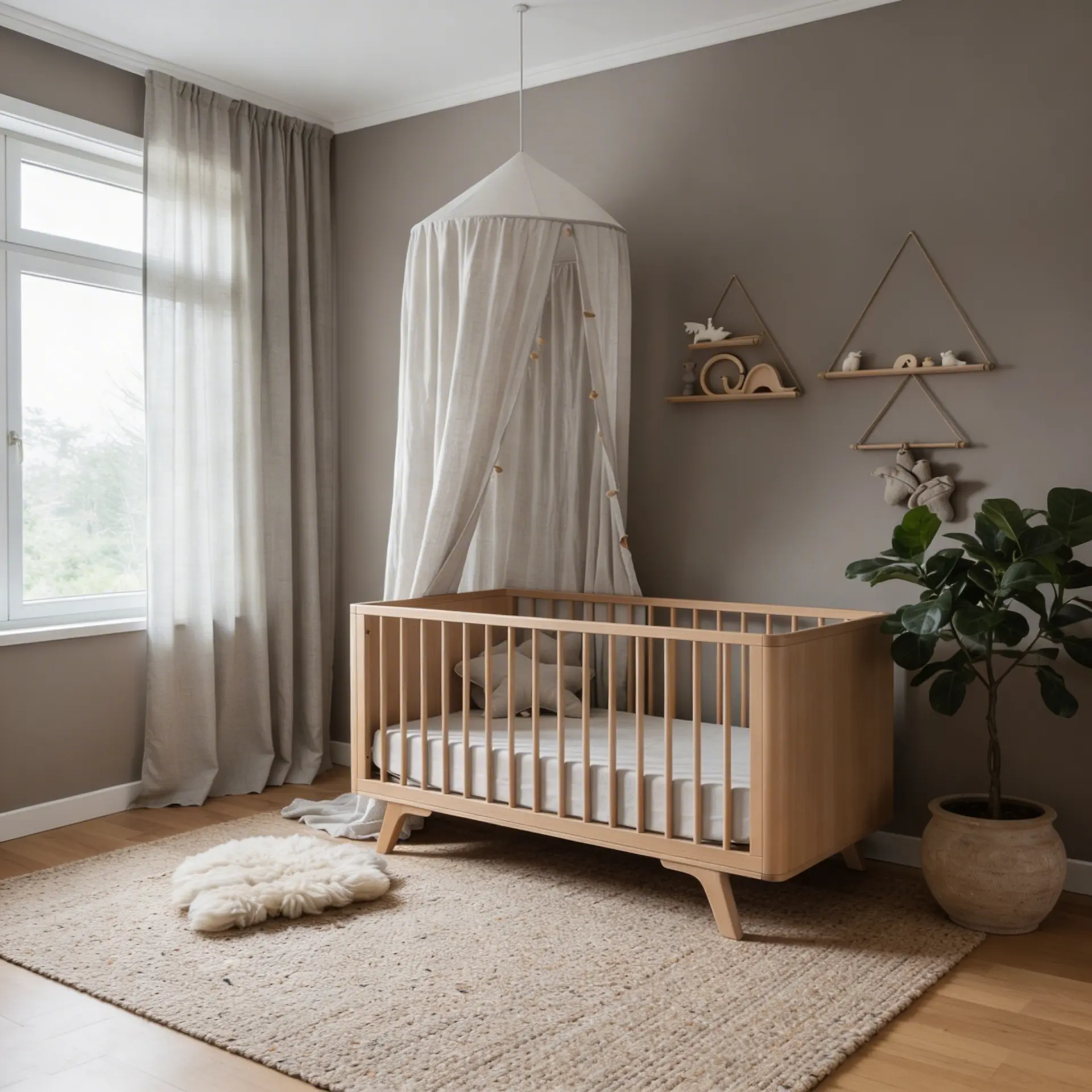
This is one reason material choices matter so much in spaces that are meant to feel restful. Bedrooms, nurseries, and family living areas should not only look soft and calm, they should support that feeling more holistically. When the air quality is better and the finishes are chosen carefully, a room often feels fresher, gentler, and easier to settle into.
Who may be more affected
Some people are more sensitive to indoor air pollutants than others. Children, older adults, and people with asthma or other respiratory sensitivities may be more affected by poorer indoor air quality. This is part of why low-VOC choices are particularly worth considering in bedrooms, nurseries, and homes where anyone is especially sensitive to smells or airborne irritants.
Low-VOC swaps that can make a difference
The good news is that creating a healthier-feeling home does not mean compromising on quality or aesthetics. There are now many well-designed products that make it easier to reduce VOC exposure while still achieving a beautiful finish.
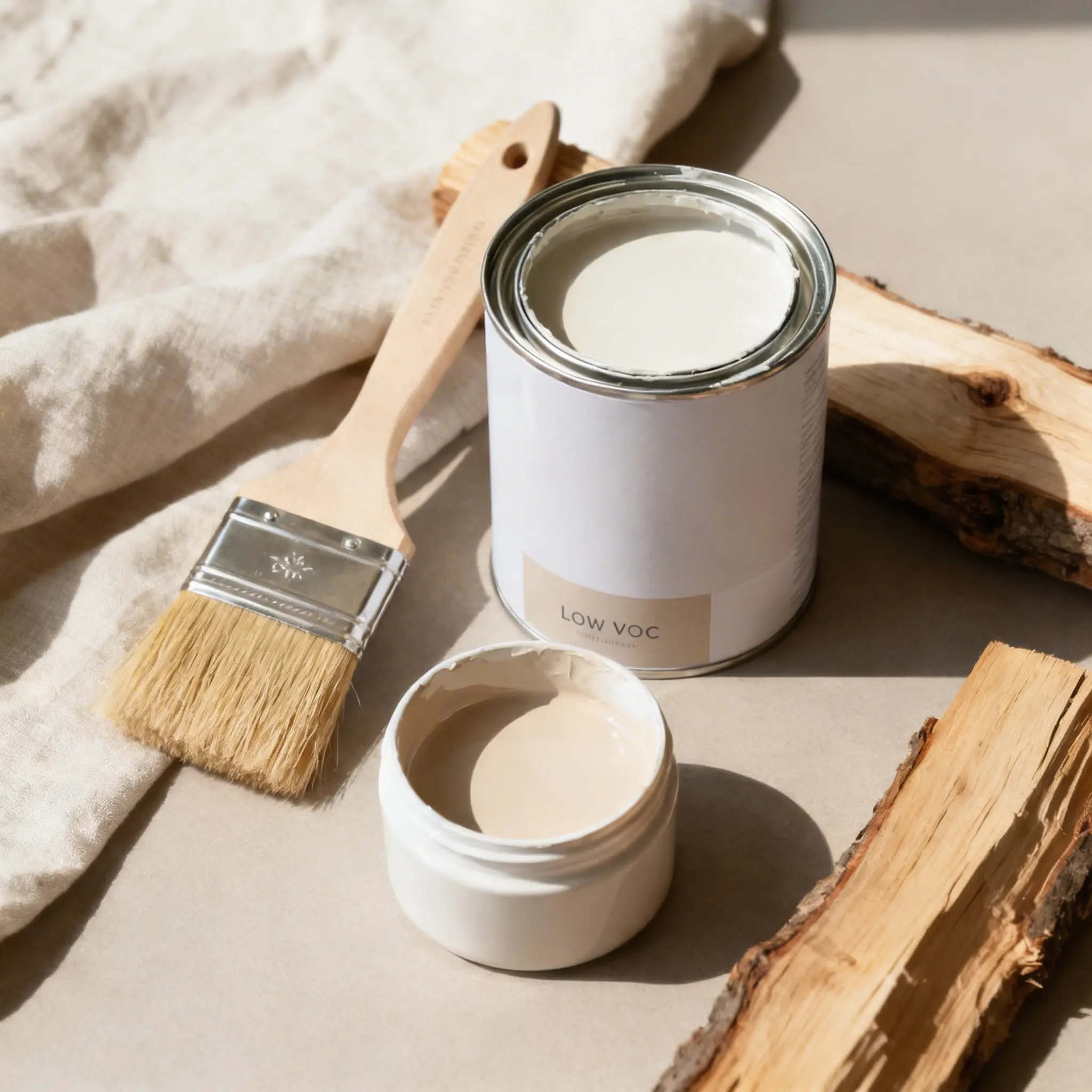
A few practical swaps include choosing low-VOC or very low-VOC paints, selecting water-based finishes where appropriate, being cautious with strong adhesives and sealants, looking for more natural material choices, and avoiding unnecessary synthetic fragrances in air fresheners and cleaning products.
Ventilation also matters: opening windows, allowing fresh air to circulate, and giving new products time to off-gas before a room is used heavily can all help reduce indoor concentrations. EPA guidance specifically recommends increasing ventilation when using products that emit VOCs.
My designer approach
When I design a room, I look beyond the finished image. Of course the scheme needs to be beautiful, cohesive, and reflective of the client, but I also want it to support comfort and wellbeing in a more complete way.
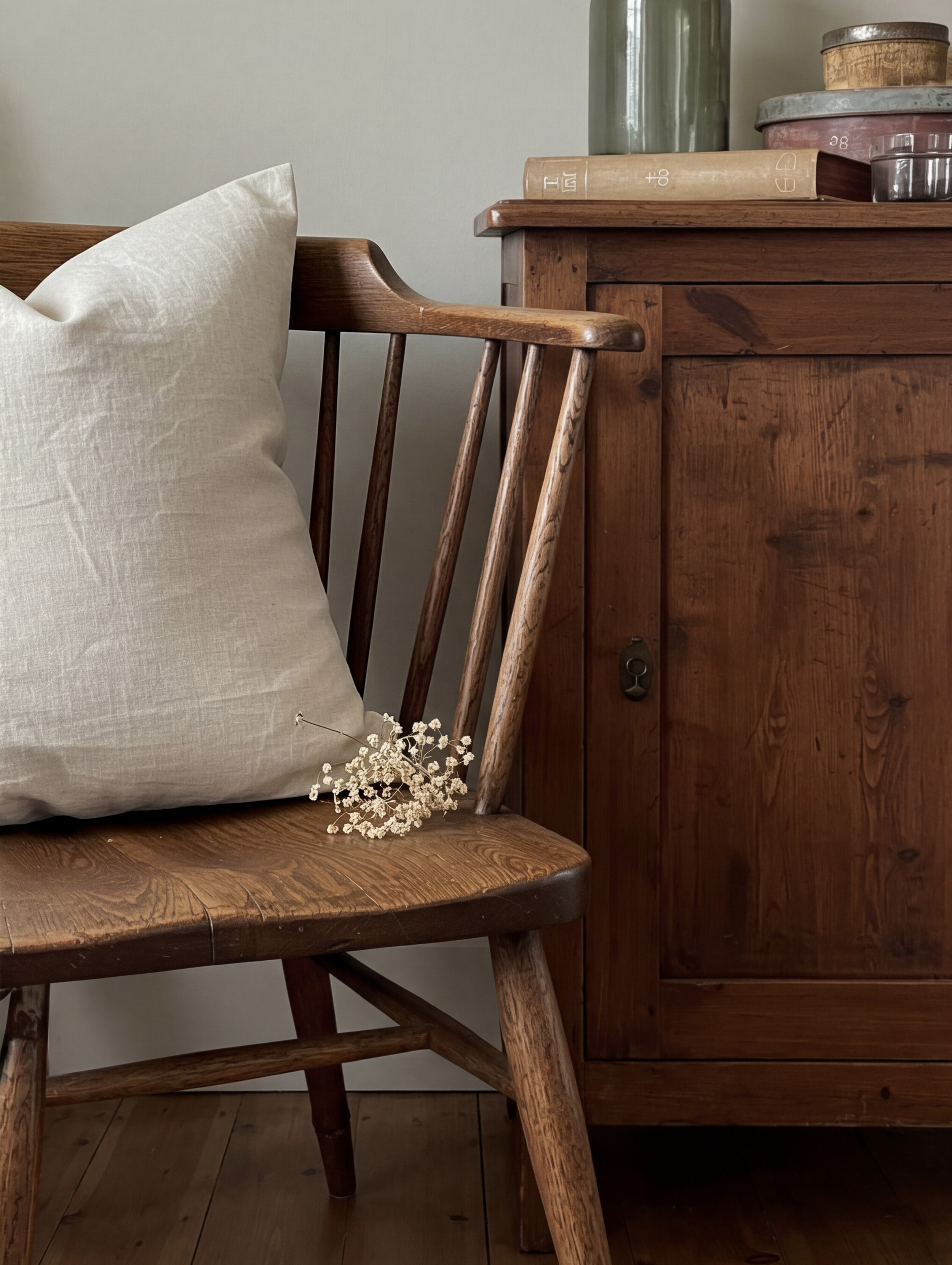
I am drawn to natural materials for far more than their aesthetic value. As part of a biophilic design approach, materials such as timber, linen, wool, stone, clay-based or lower-emission finishes, and carefully selected paints can help create interiors that support wellbeing as well as visual beauty.
I also value the role of reuse within a scheme; existing and vintage pieces can add depth, individuality, and a sense of permanence, while often avoiding the higher emissions that can come with newly manufactured items.
A simple VOC checklist for your home
If you are planning to decorate or renovate, here are a few practical things to keep in mind:
- Check whether paints and finishes are labelled low-VOC or very low-VOC.
- Think about the cumulative effect of materials in the room rather than viewing each item in isolation.
- Ask questions about adhesives, sealants, and composite materials, not just the visible surfaces.
- Prioritise ventilation during and after decorating.
- Be especially mindful in bedrooms, nurseries, and recently renovated spaces.
- Where possible, choose natural, well-made materials that contribute to both longevity and a healthier indoor environment.
“Those quieter, less obvious decisions are often the ones that shape how a room truly feels in daily life.”
Final thoughts
Luxury is not only about what you see the moment you walk into a room. It is also about how a space supports you over time; how calm it feels, how comfortable it is to live in, and how thoughtfully every layer has been considered.
VOCs may be a hidden detail, but they are worth paying attention to. With the right choices, it is entirely possible to create a home that feels elevated, personal, and restorative, while also being gentler on indoor air quality.
Frequently asked questions
About this topic
What does VOC stand for?
VOC stands for volatile organic compounds. In simple terms, they are chemicals that evaporate into the air at room temperature. They are released by a wide range of everyday products, including some paints, varnishes, adhesives, sealants, cleaning products, flooring materials, composite wood products, and furnishings.
Where are VOCs commonly found in the home?
They can be found in wall paints, primers, lacquers, wood stains, varnishes, flooring adhesives, some vinyl products, sealants, caulks, and certain types of cabinetry or furniture made with pressed wood. They can also come from soft furnishings, mattresses, air fresheners, and household cleaning products.
Why do VOCs matter?
For some people, VOC exposure may simply register as an unpleasant smell. For others, it can contribute to headaches, irritation of the eyes, nose or throat, dizziness, or respiratory discomfort, particularly in poorly ventilated spaces or where multiple emission sources are present at once. UK government and EPA guidance both note that VOC exposure can be associated with short- and long-term health effects.
Who is most affected by VOC exposure?
Children, older adults, and people with asthma or other respiratory sensitivities may be more affected by poorer indoor air quality. Low-VOC choices are particularly worth considering in bedrooms, nurseries, and homes where anyone is especially sensitive to smells or airborne irritants.
How can I reduce VOC exposure in my home?
Practical swaps include choosing low-VOC or very low-VOC paints, selecting water-based finishes where appropriate, being cautious with strong adhesives and sealants, looking for more natural material choices, and avoiding unnecessary synthetic fragrances. Ventilation also matters: opening windows, allowing fresh air to circulate, and giving new products time to off-gas before a room is used heavily can all help reduce indoor concentrations.
Filed under
wellbeingmaterials